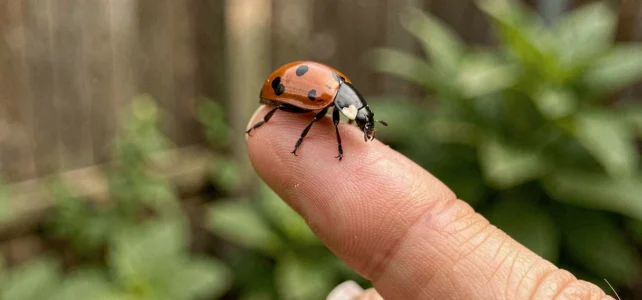
Harmonia axyridis is not to be confused with the seven-spotted ladybird. Chromatic polymorphism, winter aggregation behavior, invasive species status: the Asian ladybird carries a symbolic and ecological weight that popular beliefs oversimplify. We observe an increasing gap between the reputation of this beetle as a lucky charm and the entomological realities surrounding it.
Morphological identification of Harmonia axyridis and confusion with native species
The Asian ladybird exhibits an exceptional color polymorphism among Coccinellidae. Its shell ranges from orange-yellow to deep red, sometimes entirely black with red spots. This trait complicates its identification by non-specialists, who regularly confuse it with Coccinella septempunctata or other local species.
The most reliable distinguishing criterion remains the pronotum: in Harmonia axyridis, it bears a black M or W-shaped mark on a light background. The spots on the elytra, contrary to a persistent belief, do not indicate the age of the insect. They characterize the species and the chromatic form.
We recommend amateur naturalists to cross-reference at least three criteria (pronotum, size, spot distribution) before concluding. The larger size of Harmonia axyridis compared to European ladybirds serves as a supplementary clue, but is insufficient on its own.
To delve deeper into the significance of the Asian ladybird, one must first learn to recognize it among the hundreds of species present in France.
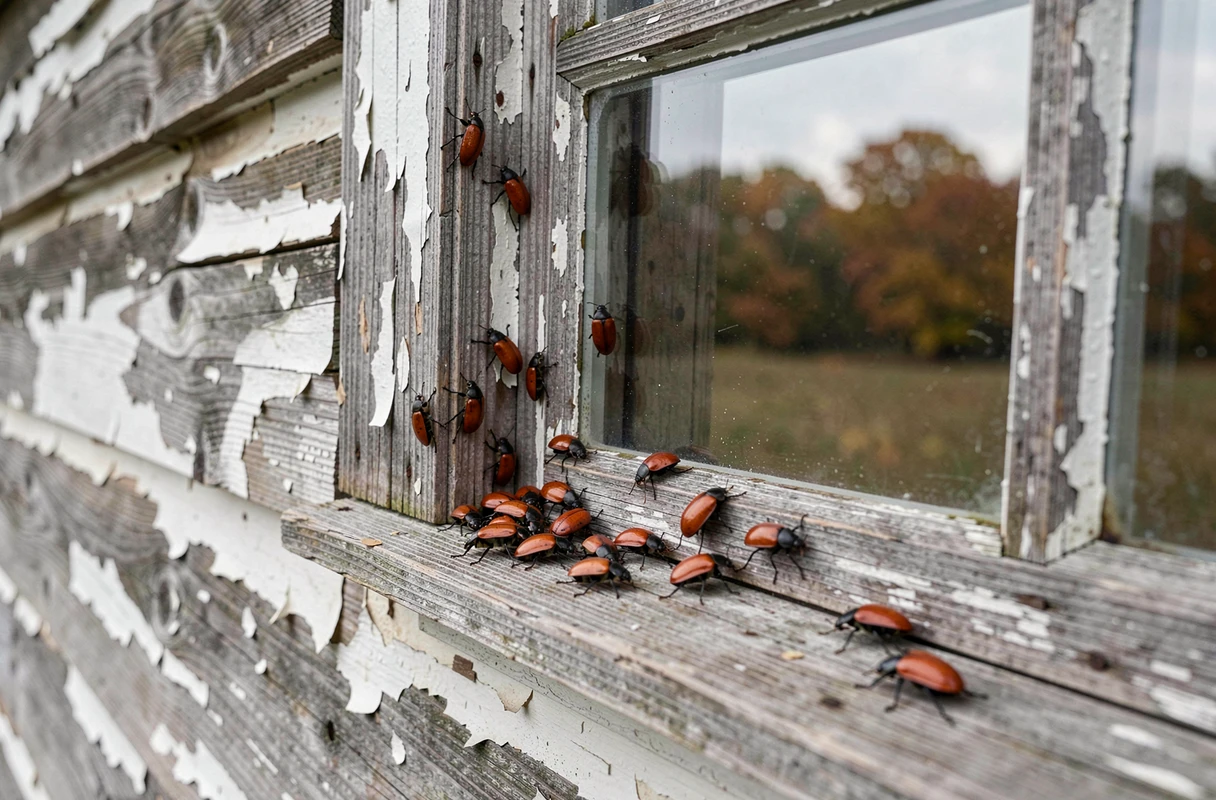
Asian ladybird and autumn invasion: an ecological phenomenon, not a mystical one
Every autumn, homeowners report massive gatherings of Asian ladybirds on their windows and facades. This aggregation behavior corresponds to a well-documented hibernation strategy. Harmonia axyridis seeks heated shelters to spend the winter, which explains its presence in homes as temperatures drop.
Gardening guides and organizations like CAA-Québec now treat this indoor presence as a seasonal invasion problem. Prevention methods focus on sealing cracks, installing screens, and gently vacuuming the clustered individuals.
Ecological imbalance and pressure on local species
The proliferation of the Asian ladybird is no longer interpreted as a blessing by naturalists. Its voracity makes it a formidable ally against aphids, but it competes directly with native ladybirds for food and hibernation sites. Its massive presence signals a local ecological imbalance rather than a sign of garden health.
Harmonia axyridis can also consume the larvae of other ladybirds, which increases the pressure on indigenous populations. In a garden, distinguishing the dominant species among the present ladybirds provides valuable insight into the state of local biodiversity.
Beliefs and symbolism of the ladybird: what traditions retain
The nickname “God’s creature” dates back to a medieval legend. A death row inmate was said to have been spared after a ladybird landed repeatedly on his neck, preventing the executioner from striking. The king then pardoned the man, attributing the intervention to divine will.
This legend anchors the ladybird in a realm of divine protection and luck. In European tradition, killing a ladybird is said to bring bad luck. If it lands on a person, that person can make a wish. The number of spots on its shell would indicate, according to some beliefs, the number of months of happiness to come.
- In Europe, the ladybird heralds luck and good news. Its appearance is perceived as a positive omen.
- In several traditions, a ladybird landing on someone signals a romantic encounter or the strengthening of an emotional bond.
- In the garden, its presence is associated with the health of crops, as it consumes significant amounts of aphids and other pests.
These beliefs historically apply to European ladybirds, particularly Coccinella septempunctata. The symbolic transfer to the Asian ladybird remains contested by naturalists, who point out that the invasive species does not benefit from the same cultural grounding.
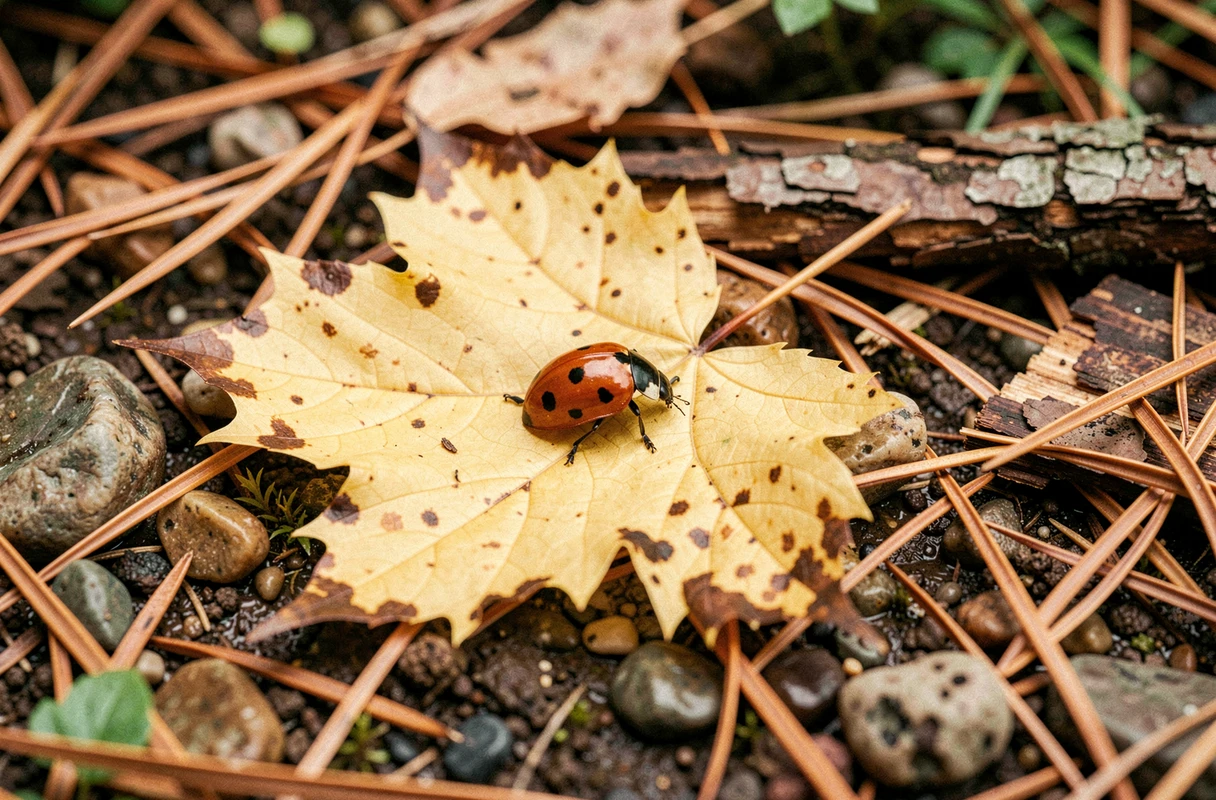
Red or black ladybird in the garden: interpreting their presence differently
The color of the shell often conditions gardeners’ reactions. A red ladybird with black spots reassures. A black ladybird with red spots, common among Harmonia axyridis, provokes more suspicion. This reaction has no entomological basis: both forms belong to the same species and serve the same predatory role.
The presence of ladybirds in a garden primarily indicates an active population of aphids. It is a bio-indicator rather than an omen. A garden without aphids does not attract ladybirds, regardless of the owner’s supposed “luck.”
Biological control agent: real effectiveness
Harmonia axyridis has been intentionally introduced in several countries as a biological control agent against aphids. Its effectiveness is documented: a single adult Asian ladybird can consume a considerable volume of aphids over its lifetime.
- The Asian ladybird preys on aphids, scale insects, and other soft-bodied insects present on crops.
- Its intentional introduction preceded its uncontrolled spread in European ecosystems.
- Gardeners who observe a dominance of Harmonia axyridis at the expense of local species should see it as an ecological warning sign.
The status of a useful ally coexists with that of an invasive species. The utility in the garden does not compensate for the impact on local biodiversity, and this nuance is often missing in most articles focused on symbolism.
The Asian ladybird encapsulates a paradox that popular beliefs do not capture. A lucky charm for some, an ecological threat for others, Harmonia axyridis compels us to move beyond symbolic interpretation. Observing which species dominates in one’s garden remains the most useful action, well before counting the spots on a shell.