The autumn-winter 2026 fashion trends are not just a list of items to buy. The season marks a shift towards global styling, where the combination of textures, cuts, and colors takes precedence over acquiring a single garment. The challenge remains to measure what distinguishes a sustainable trend from a fleeting fashion effect, and to identify the pieces that truly deserve a place in an already established wardrobe.
Autumn-Winter 2026 Trends: Sustainable Pieces vs. Passing Fashion Effects
Not all trends spotted on the runways have the same lifespan in a wardrobe. Some rely on cuts or materials that transcend seasons, while others depend on a strong visual effect that is difficult to reuse year after year.
| Trend | Type of Piece | Durability Potential | Risk of Rapid Obsolescence |
|---|---|---|---|
| Tight tailoring (strong shoulders, double-breasted jacket) | Jacket, trousers | High: reinterpreted classic cut | Low |
| Tactile materials (velvet, shearling, jacquard) | Coat, dress, bag | Medium to high depending on the piece | Low if in neutral color |
| Composed look / layering | Styling, not an isolated piece | High: relies on existing items | Almost none |
| Strong patterns (seasonal graphic prints) | Dresses, shirts | Low to medium | High: dated in two seasons |
| Full oversized silhouette | Trousers, coat | Declining this season | High: more fitted tailoring takes over |
This table highlights a often overlooked point: the most wearable trends are those that modify styling, not the wardrobe. Layering or choosing a tactile material on an existing piece requires no additional purchases.
The analyses compiled on Spotrank’s fashion site confirm that the season values the recomposition of silhouettes more than the acquisition of isolated pieces.
Tight Tailoring and Narrow Trousers: What the Cut Shift Means Practically
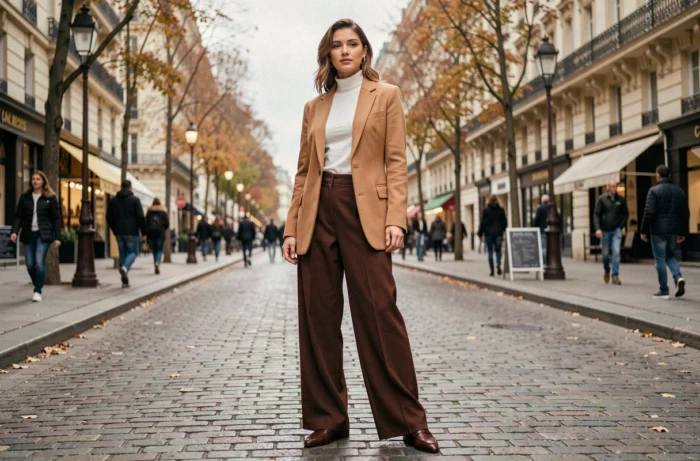
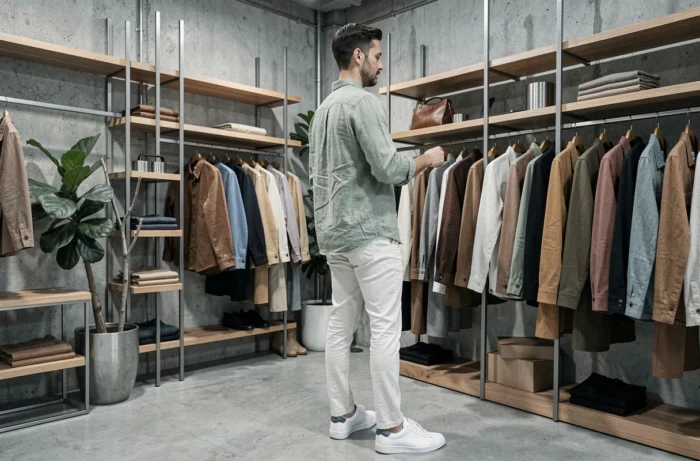
After several seasons dominated by volume, tailoring is clearly tightening in autumn-winter 2026. Shoulders remain strong, but jackets are often double-breasted and trousers abandon the ultra-wide cut for a narrower fall. This movement has been observed at Louis Vuitton, Celine, Victoria Beckham, and Hermès.
This shift has a direct practical consequence: a wide pair of trousers bought two seasons ago does not become obsolete, but it benefits from being worn with a more structured jacket to stay in tune. The balance of the silhouette plays out between the top and bottom, not in replacing one piece with another.
On the other hand, investing in a double-breasted jacket with strong shoulders this season remains a reasonable bet. This cut returns cyclically and fits both professional contexts and more casual looks. The narrow trousers, however, are more divisive: their longevity depends on body shape and personal style.
Tactile Materials: Velvet, Shearling, and Jacquard as Alternatives to Seasonal Prints
The 2026 season places materials at the center of style. Velvet, faux fur, shearling, jacquard, and quilted surfaces no longer serve solely to keep warm: the material becomes the main visual element of an outfit.
This approach offers a concrete advantage over very strong graphic prints. A corduroy coat or a shearling jacket retains its appeal beyond a season, whereas a highly identifiable pattern (an oversized floral print, neon checks) quickly dates the outfit.
Materials to Favor for Sustainable Investment
- Velvet (corduroy or smooth) on trousers or a blazer: versatile, it works in professional settings as well as for outings
- Jacquard on a structured piece (jacket, midi skirt): its relief replaces the need for flashy accessories
- Shearling or faux fur on a short coat: a single piece transforms a basic outfit into a composed look
In contrast, very bulky quilted materials risk following the trajectory of oversized puffer jackets: very visible one season, then relegated to the back of the closet.
Composed Look and Layering: Following the Trend Without Buying Additional Pieces
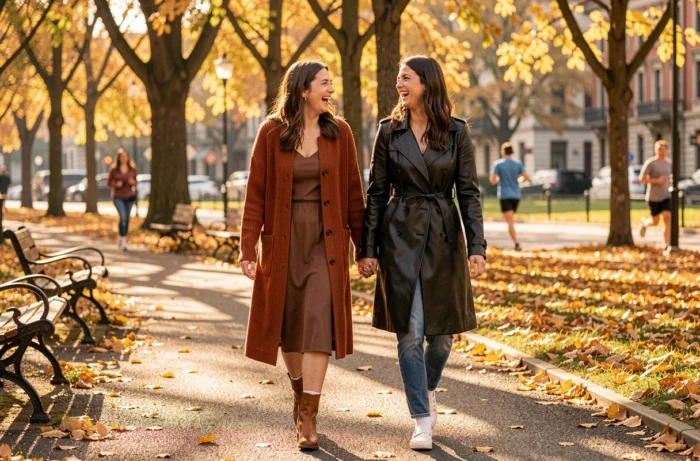
The autumn-winter 2026 shows favor unexpected combinations and the accumulation of accessories. The trend lies in global styling, not in the purchase of an isolated garment. A trench coat already owned, worn open over a knit turtleneck with a thin belt, creates a very different effect from the same trench buttoned over jeans.
This principle of the “composed look” has a direct implication for the fashion budget. Reconfiguring an existing wardrobe, by testing layering of textures or color contrasts that hadn’t been considered, is often enough to refresh a wardrobe.
Autumn-Winter 2026 Colors: Combinations That Change a Basic Piece
The season’s colors oscillate between intense warm tones and earthy shades. Pairing a top in a saturated hue (rust, plum, mustard) with a neutral bottom already owned creates a contrast that anchors the silhouette in the season without necessitating a purchase.
- A rust sweater over dark gray trousers: immediate autumn-winter pairing
- A colorful jacquard scarf over a black coat: a single accessory is enough to change the reading of the outfit
- A velvet or faux fur bag as a focal point on a sober monochrome look
The best lever to follow fashion trends remains the recombination of existing pieces. Tactile materials, tight tailoring, and layering share a common point: they do not require a complete wardrobe renewal. The autumn-winter 2026 season rewards those who know how to compose rather than accumulate.