We install solar panels, we produce during the day, and in the evening, we draw from the grid as before. This scenario is experienced by thousands of households. The question of electricity storage batteries then arises very concretely: keep your surplus to consume later, or sell it back at a price that has become negligible.
Buyback rate for surplus in 2026: the calculation that changes everything
Before discussing technology, let’s look at the numbers. The tariff order S21, which came into effect on June 1, 2026, eliminated the self-consumption bonus for all new connection requests submitted from June 4, 2026. The bonus could still represent up to 380 euros per kWc a few years earlier.
The buyback rate for surplus for installations of 9 kWc or less has dropped to 0.011 euro per kWh. This is a reduction of about seven times compared to early 2026, and more than ten times compared to 2023.
Result: 1 kWh self-consumed via battery is worth 15 to 20 times more than 1 kWh sold. When we know that an average family with panels produces a significant surplus in the middle of the day, the balance shifts. Storing this surplus instead of injecting it into the grid becomes the most profitable option, provided that the cost of the battery does not eat up all the profit.
To better understand electricity storage batteries and their implications, we must also consider the actual lifespan of these devices and their behavior after several years of use.
Actual lifespan of a domestic lithium-ion battery
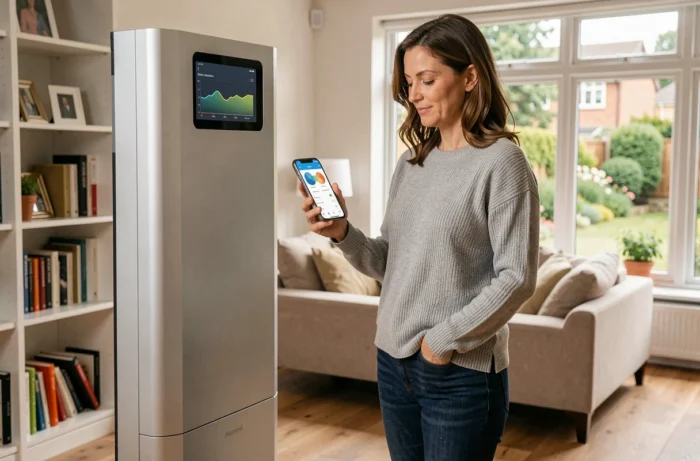
Manufacturers generally announce a lifespan of ten years or a number of cycles between 4,000 and 6,000. In practice, feedback varies on this point. A lithium-ion LFP (lithium iron phosphate) battery retains its capacity better over time than an NMC (nickel manganese cobalt), but it stores slightly less energy per kilogram.
Degradation mainly depends on installation conditions: ambient temperature, daily depth of discharge, quality of the hybrid inverter managing the cycles. A well-ventilated garage at 20 degrees is nothing like a technical room in the attic during the height of summer.
Three concrete criteria to check before investing:
- The manufacturer’s warranty on residual capacity (some guarantee 70% of the initial capacity at ten years, others 80%)
- The number of cycles covered by the warranty, not just the duration in years
- Compatibility with the existing inverter, as replacing the inverter can add a significant cost
Self-consumption rate: the real profitability indicator
We often hear about yield or peak power. The figure that matters for an individual is the self-consumption rate, the share of solar production actually used on-site.
Without a battery, a household that operates during the day self-consumes a modest fraction of its production. The bulk of the surplus goes to the grid. With a properly sized battery, this rate can be significantly increased, sometimes beyond three-quarters of total production.
Sizing the battery to consumption profile
Installing a battery that is too large ties up capital for kWh that will never be discharged. If it’s too small, it empties before the end of the evening and we revert to the grid.
The right method is to analyze your consumption curves over a full year. We look at the gap between production and consumption hour by hour. A storage capacity covering evening and night consumption is sufficient in most cases. Going beyond that only improves profitability if you have an electric vehicle to charge at night or a programmable thermodynamic balloon.
Risks and limits often underestimated
The price of lithium-ion batteries has decreased significantly in recent years globally, but the initial investment remains substantial for a household. We are talking about equipment that often represents several thousand euros, including installation.
Fire safety of lithium-ion batteries
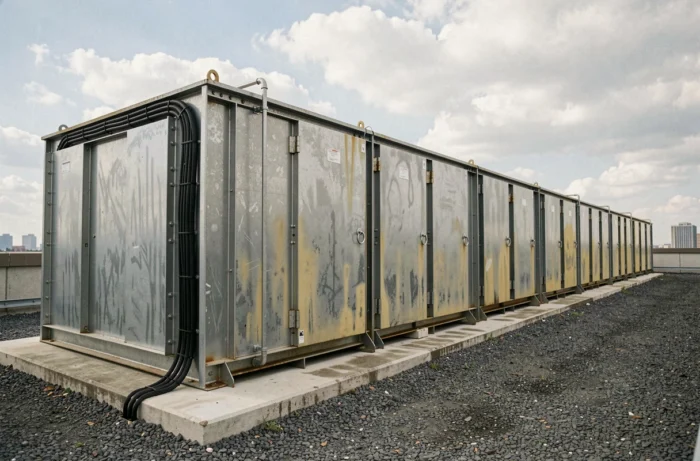
Lithium-ion batteries present a risk of thermal runaway in the event of manufacturing defects, shock, or prolonged overheating. Domestic installations must comply with strict safety standards, and the choice of a certified installer directly affects the safety of the system.
Some points not to overlook:
- The location of the battery must be ventilated and accessible to emergency services
- A smoke detector nearby is recommended
- Insurers increasingly require a certificate of compliance to cover the installation
- LFP batteries are reputed to be more thermally stable than NMC
Recycling and mining extraction
The ecological balance of a battery does not stop at its use. The extraction of lithium, cobalt, or nickel raises documented environmental and social issues. Recycling is progressing, but large-scale industrial channels are still being structured in Europe. Adopting a battery extends the environmental return of a solar installation by a few years compared to a configuration without storage.
Physical battery or virtual storage: two different logics
Some suppliers offer a “virtual battery” system: the surplus is injected into the grid and counted as a credit in kWh, usable later. Nothing is physically stored at home.
The advantage is clear: no material investment, no installation-related risks. The downside is also clear: you remain dependent on the grid and the supplier’s pricing conditions, which can change. In the event of a power outage, the virtual battery provides nothing.
The physical battery, on the other hand, offers a backup function during outages. For households located in areas where the grid is fragile, this argument weighs as much as pure profitability.
The choice between the two depends on the profile: an urban household well connected with a small surplus may be satisfied with virtual storage. A house in a rural area with a substantial solar installation and regular outages has every interest in investing in physical storage, even if it means extending the return on investment by a few years.