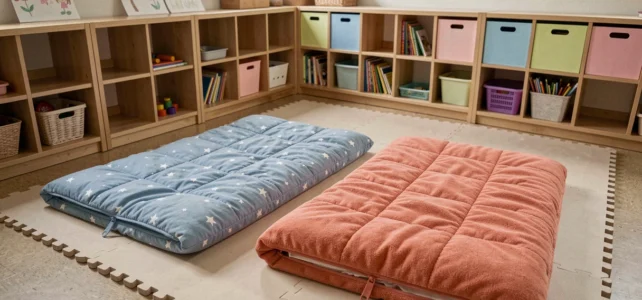
Since education became mandatory from the age of 3, naptime in the preschool’s first year involves almost all enrolled children. Each school has its own practices: some provide sheets and blankets, while others ask parents to bring a sleeping bag. The choice of this equipment may seem trivial, but it raises concrete questions about materials, dimensions, maintenance, and even regulations.
Nocturnal cleanliness and sleeping bags: a rarely addressed angle
Buying guides focus on comfort or design. They often overlook a sensitive topic: accidents during naptime. The Ministry of National Education reminded in an official response to the Senate that no text can condition schooling on cleanliness, even during rest time.
A child who still wears a diaper or has leaks during naptime cannot be refused by the director. Parents are encouraged to provide extra changes and, if necessary, suitable training pants.
This reality has a direct impact on the type of sleeping bag to prefer. A model with an easily washable inner lining, or even a version with a discreet waterproof lining, avoids embarrassing situations for the child and simplifies management for the teacher. Choosing the sleeping bag for naptime in preschool while considering this practical aspect changes the game compared to a purchase solely guided by aesthetics.
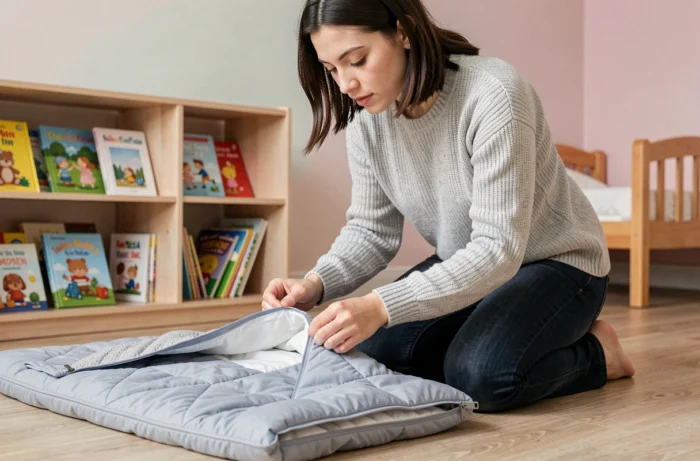
Materials and lining: cotton, polyester, or blends for naptime in preschool
The fabric in contact with the child’s skin during naptime deserves special attention. Two main families stand out.
Certified Oeko-Tex Cotton
Cotton remains the most recommended material for indoor use. It regulates body temperature, absorbs sweat, and withstands frequent washing without deforming. The Oeko-Tex certification guarantees the absence of harmful substances, a point to check on the label before purchase.
Polyester and synthetic blends
Some models use polyester for the outer face or filling. Polyester dries faster after washing, which can be an advantage when the bag needs to go back to school on Monday morning. However, it retains more heat and can cause excessive sweating in children who easily get hot.
A common compromise is to choose a bag with a cotton inner lining and a polyester outer shell. This blend combines comfort against the skin and durability.
Size and TOG rating: two technical criteria not to be confused
The size of the sleeping bag and its thermal insulation rating (TOG) meet distinct needs. Confusing them leads to inappropriate purchases.
- The size must correspond to the child’s morphology, not their age. A bag that is too large creates folds under the back on the plastic cot and disrupts sleep. A bag that is too short compresses the feet and prevents the child from stretching.
- The TOG rating measures the thermal insulation capacity of the fabric. For an indoor nap, in a heated room between autumn and spring, a low TOG is sufficient. A bag designed for camping with a high TOG will make the child sweat.
- So-called adjustable models offer extension systems or snaps to adjust the length. They allow the same bag to be used over multiple seasons, or even several school years.
Most preschools maintain a relatively stable room temperature. An appropriate TOG for indoors prevents overheating, a source of restlessness during naptime and early awakenings.
Maintenance and transport: what daily use in school requires
A sleeping bag for preschool is nothing like a hiking bag used two weeks a year. It is handled by the child themselves, placed on a molded plastic cot, rolled or folded every day, and regularly taken home for washing.
The zipper must be operable by a 3-year-old. Double-slider systems or overly rigid closures pose problems: the child cannot open or close their bag alone, which hinders their autonomy and draws the teacher’s attention.
Weight and bulk also matter. A lightweight bag, delivered with a small storage bag or equipped with compression straps, is easier to carry in a backpack or satchel. Oversized models end up remaining permanently at school, without regular washing.
Recommended washing frequency
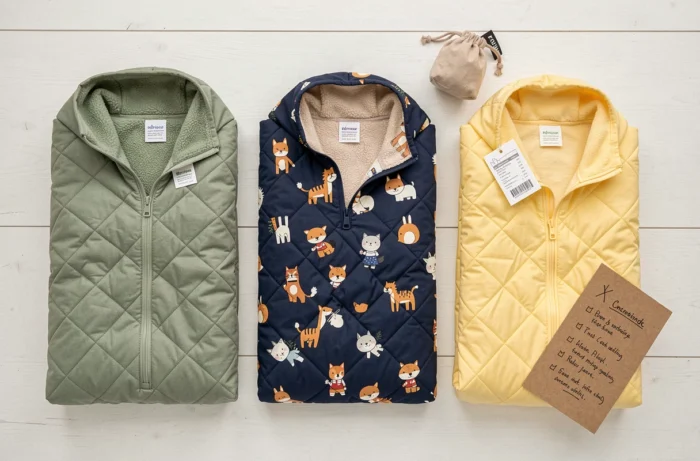
Field feedback varies on this point. Some schools require weekly washing, while others are satisfied with a machine wash every two weeks. In any case, a bag that can withstand a machine wash at 40 °C minimum without losing its shape or filling remains the safest choice.
School time arrangement: do all children need a sleeping bag
Since the generalization of mandatory education at age 3, texts allow parents to request adjustments to afternoons in the first year. Specifically, a child can be exempted from the afternoon to nap at home, upon written request to the director and after consultation with the teaching team.
This option remains little used, but it deserves to be known. A child who does not stay in the afternoon does not need a sleeping bag at school. Before investing, checking with the school whether the child will indeed nap on-site helps avoid an unnecessary purchase.
For children who stay, the sleeping bag remains an emotional anchor. Finding their own bag, with a pattern or color they recognize, helps the child settle into the ritual of collective rest, especially during the first weeks of September.
The most reliable criterion for making a good choice remains to cross the school’s constraints (dimensions of the cot, washing rules, available storage space) with the child’s profile (sensitivity to heat, autonomy with closures, cleanliness acquired or in progress). A bag suited to these two realities will serve its purpose well beyond the first year.