
In full sun, on a market or a terrace without shade, you can feel the difference between a light gray t-shirt and a black t-shirt in less than ten minutes. The color of the garment directly affects the amount of heat absorbed by the fabric, and thus the comfort felt on the skin. Understanding which color attracts the least sunlight allows for concrete clothing choices before heading out, without sacrificing style.
UPF Fabric and Color: What Certification Changes the Problem
We often think only in terms of light or dark shades. But UPF (Ultraviolet Protection Factor) certified textiles disrupt this logic. According to Franceinfo, a garment certified UPF 40+ offers the maximum level of UV protection required by European regulations, regardless of its apparent color.
In practical terms, a navy blue or khaki polo with an anti-UV finish protects more than a basic white t-shirt without treatment. The density of the weave, the type of fiber, and the chemical treatments applied to the fabric matter as much, if not more, than the color alone. To know which color attracts the least sunlight in a given context, we must therefore consider two parameters: the shade and the construction of the fabric.
A loose-weave white linen allows a significant amount of UV to pass through. A tight-weave black cotton blocks almost all of them but accumulates heat. The compromise lies between these two extremes, and this is where UPF certification settles the debate for those who want reliable protection without second-guessing.

White, Beige, Khaki: Thermal Comfort of Light Colors in Real Situations
On the ground, light colors remain the most effective at limiting the sensation of heat. White reflects the majority of the visible and infrared light spectrum. You can physically feel it: a white t-shirt exposed to the sun remains significantly cooler to the touch than a dark t-shirt after a few minutes.
Feedback varies on this point depending on ambient humidity and wind, but in dry conditions and without airflow, white and beige offer the best immediate thermal comfort. Khaki and sage green, slightly darker, absorb a bit more heat but remain in a comfortable zone.
Shades to Favor When It’s Very Hot
- Pure white, which reflects the most light and limits fabric heating to the maximum
- Beige and cream, close to white in thermal performance, easier to wear without looking too “clinical”
- Light khaki and sage green, which absorb a bit more radiation but remain fresh shades in practice
- Sky blue or pastel blue, often underestimated, which combine good light reflection and stylish appearance
On the other hand, black absorbs almost all solar radiation. This is not a myth: place two t-shirts, one white and one black, on a surface in the sun for twenty minutes, and the temperature difference to the touch is striking.
The Paradox of Black: Maximum UV Protection but Heat Accumulation
Black blocks the vast majority of ultraviolet rays. This is a physical fact: dark shades absorb UV instead of allowing them to pass through the fabric to the skin. For skin protection, black surpasses all light colors with equivalent weaving.
The problem is that this absorption also concerns infrared radiation, which produces heat. Wearing black in full sun protects the skin but increases the perceived temperature. In the city, without wind, the effect is particularly pronounced.
When Black Remains a Defensible Choice
If you wear a loose black garment (oversized shirt, flowing dress), air circulates between the fabric and the skin. The heat accumulated by the textile partially dissipates before reaching the body. This is the principle used by traditional clothing in desert regions: dark fabrics, very loose cuts.
In a fitted cut, black clings to the skin and directly transfers the absorbed heat. This is the worst configuration in high heat. The cut of the garment matters as much as its color for real thermal comfort.
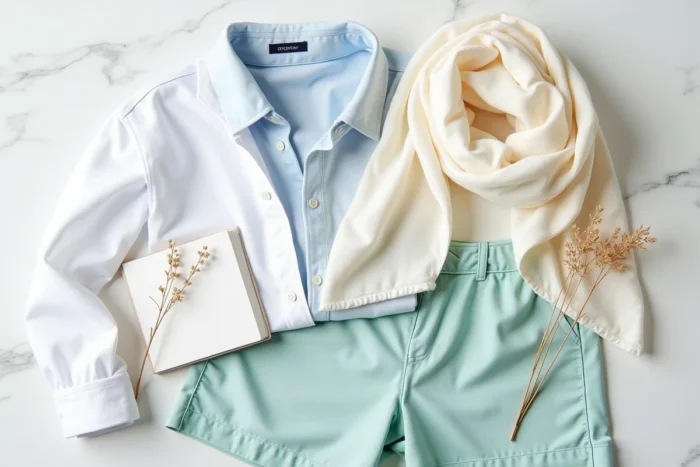
Materials and Cuts: Criteria that Matter as Much as Color
Focusing solely on shade ignores half the problem. Two additional criteria determine whether you will cook or stay comfortable under the sun.
The Choice of Material
Linen allows air to circulate and dries quickly. Cotton absorbs sweat but can become heavy and clingy. Synthetic fibers like recycled polyester, if they incorporate an anti-UV treatment, can offer a good lightweight-protection compromise. An article published in Grazia reminded us that some materials we associate with winter, like thick linen, are actually well-suited for high heat.
The Cut: Loose Rather Than Fitted
- Loose clothing creates an insulating layer of air between the fabric and the skin, which slows down heat transfer
- Fitted cuts press the fabric against the body and eliminate this buffering effect
- Long and wide sleeves protect the arms better than a tank top, while remaining comfortable if the fabric is light
You can wear an oversized white linen shirt and achieve a result that is both protective and aesthetic. Or choose a straight-cut pastel blue UPF t-shirt for a more urban look. The combination of light color, breathable fabric, and loose cut forms the winning trio against heat.
Ultra-Express Anti-Fashion Law: An Impact on Cheap Summer Clothing
The French law definitively adopted by the Senate on June 29, 2026, now targets “ultra-express fashion,” defined by a very wide range depth and a low repairability index. It provides for a financial penalty per garment, which can reach several euros depending on the category.
For summer t-shirts and tank tops sold at very low prices on certain platforms, this additional cost will mechanically increase the final price. Investing in a durable garment with UPF treatment becomes more economically relevant than buying several disposable pieces each season. A densely woven t-shirt with anti-UV finish lasts several summers, whereas an ultra-cheap model loses its properties after a few washes.
The most effective reflex remains simple: choose light colors, breathable materials, and cuts that allow air to circulate. The color of the garment provides the first level of thermal comfort, but it is the combination of fabric-cut-treatment that determines whether you spend the summer cool or sweating.