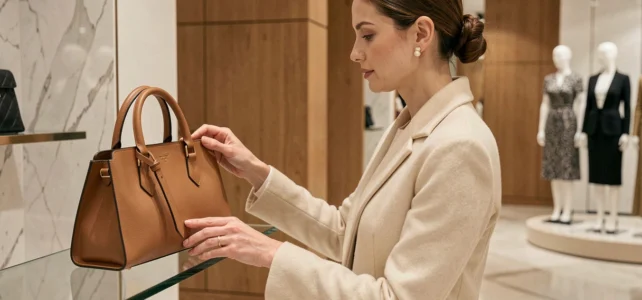
Buying a luxury item online is no longer what it was a few years ago. Shopping journeys have transformed, platforms have specialized, and buyer expectations have changed. Understanding these evolutions allows for more informed choices, whether you’re looking for a designer dress, leather accessories, or an authenticated second-hand piece.
Hybrid model of store and digital: what changes for the online fashion buyer
Have you noticed that some brands no longer sell directly on their website, but instead offer to reserve an item online to try it in-store? This approach has a name: digital clienteling.
In practice, the digital channel is more about preparing the purchase than finalizing it alone. Recent analyses of the luxury market confirm this trend: digital ensures inventory visibility and assisted conversion, without seeking to replace the physical experience.
For you, this means that browsing collections online remains the best starting point. You spot pieces, compare cuts, check availability. If you want to explore a varied selection of creations and accessories, Luxe On Line brings together fashion references categorized by universe and style.
The real change for the buyer: the physical store and the website are no longer two separate worlds. A sales associate in-store can access your online browsing history, suggest complementary pieces, or send you a link to a garment you spotted together. This seamless journey between screen and fitting room redefines how one builds their style.

Second-hand and luxury online: a shopping reflex that has become common
Not long ago, buying a second-hand designer bag online required a certain boldness. Today, second-hand represents a common shopping behavior in online fashion. A significant portion of buyers who order new items also purchase second-hand pieces on the same platforms.
Why this shift? Three main reasons explain this evolution:
- The offer has become structured: online consignment platforms provide rigorous authentication processes, with physical expertise and documented traceability for each piece.
- The entry price is decreasing: a jacket or accessory from a major house becomes accessible to a broader budget, without compromising on material quality.
- The European DAC7 regulation now requires marketplaces to collect and transmit to tax authorities the identities and incomes of sellers, which strengthens the traceability of second-hand luxury sales and cleans up the market.
This regulatory framework discourages non-compliant sellers and favors serious players. The result: buying a second-hand piece online today offers guarantees comparable to those of new items, provided you go through a platform that respects these obligations.
European compliance: what the new rules change for your luxury shopping
This point often goes unnoticed, but it has a direct impact on the quality of what you find online. Product compliance obligations have increased for sellers located outside the European Union. Packaging, product safety, local representation: cross-border merchants must now structure their legal presence in Europe to continue selling.
In practice, this favors stores and platforms already established in the territory. These players have a better grasp of the standards, offer simpler returns, and ensure the compliance of the clothing and accessories sold.
Identifying a compliant platform
Before finalizing a purchase, a few quick checks can help distinguish a reliable seller:
- A return address located in the European Union, clearly indicated in the sales conditions.
- Complete legal mentions with identification of the European legal representative.
- A return policy of at least fourteen days, in accordance with European consumer law.
- A certificate of authenticity or a verification process described on the site for luxury items.
These criteria do not guarantee perfection on their own, but they eliminate the majority of unscrupulous sellers. A seller who cannot provide a European return address deserves your caution.
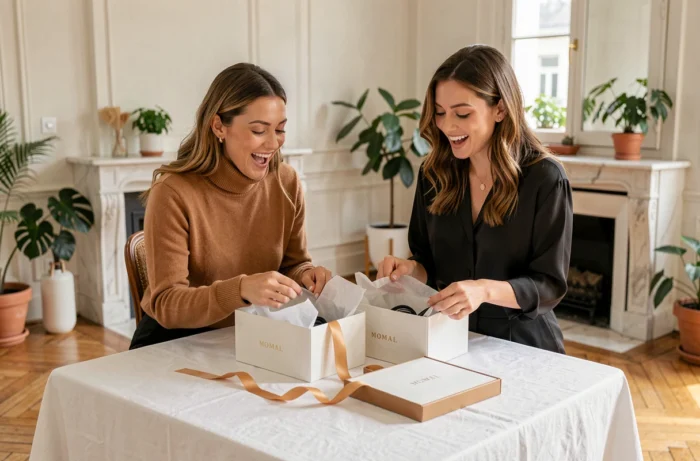
Selection of pieces and accessories: building a chic style without a catalog effect
A common mistake in online luxury shopping is accumulating trendy pieces without coherence. A well-thought-out wardrobe rests on a simple principle: each garment should be able to combine with at least three others already present in your closet.
Rather than chasing every new collection, focus on creations whose cuts and materials transcend the seasons. A quality crepe dress, a structured grained leather bag, a pair of closed-toe shoes: these pieces form a solid foundation.
Personal touch and fashion trend
The current trend in luxury fashion values the mix between classic pieces and more assertive accents. A colorful accessory on a sober outfit, an oversized jacket worn over a fitted dress: style is built through contrast, not accumulation.
Online boutiques facilitate this approach with filters by color, material, or silhouette. Take the time to browse by category rather than by brand. You will discover combinations you might not have thought of in-store, where staging guides the eye towards the season’s key pieces.
Online luxury shopping is becoming more reliable and deeper as regulations strengthen and hybrid models become widespread. Choosing compliant platforms, verifying the authenticity of second-hand pieces, and prioritizing wardrobe coherence over quantity: these three reflexes are enough to transform a browsing session into a true style decision.