A newborn in a 45 m² apartment calls for a different setup than one in a house with a dedicated nursery. Standard baby registries—the ones you find everywhere—overlook this reality. Choosing the essentials for your baby starts with considering your own space, your actual budget and what you’ll use in the first few weeks, not six months from now.
Tailor your baby registry to your home and budget
Before ticking boxes on a standard list, measure the space you have available. In a studio or one-bedroom apartment, a compact travel cot or a bedside crib attached to the parents’ bed is a better choice than a traditional cot that takes up an entire wall. The mattress should be firm and fit the chosen sleep space perfectly, with no gaps between the edge and the frame.
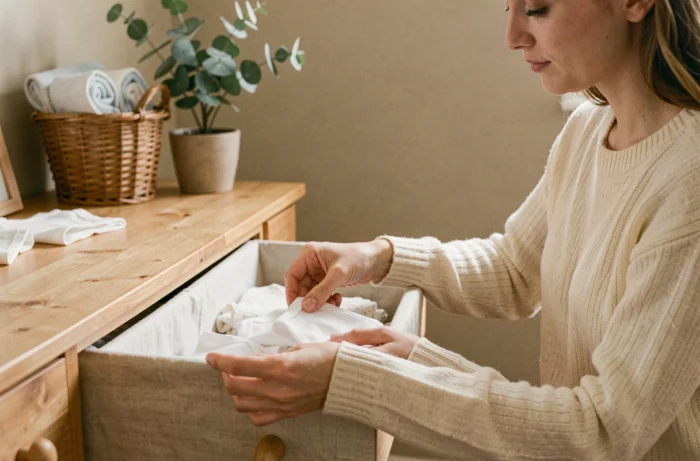
You don’t have to buy a freestanding changing table. A changing mat on top of an existing dresser does the job just as well, saving space and money for what really matters.
Buying second-hand also changes the equation. Strollers, bouncers and newborn clothes are often in excellent condition on resale platforms or at reuse centres. The cot mattress is the only item you should buy new, for hygiene and safety reasons. Everything else can be reused, as long as you check for product recalls and make sure the fastenings are in good condition.
To gradually build up your baby’s essentials at Babys Corner, you’ll find a wide selection that lets you focus on exactly what you need as the weeks go by.

Newborn sleep and bedding: what you’ll need from day one
Sleep is the top priority. Newborns sleep between sixteen and twenty hours a day during their first few weeks. Three items are enough to get started.
- A sleep space suited to your home (bassinet, bedside crib or cot) with a firm mattress that fits the base exactly. No pillows, blankets or cot bumpers: a bare, safe sleep space reduces the risk of suffocation.
- Two or three sleep sacks in the right size. Newborn size usually fits until three or four months. Choose the thickness (measured in TOG) according to the room temperature.
- At least two fitted sheets so you have a clean one ready while the other is in the wash. A dirty sheet at three in the morning with no spare is a situation you’ll want to avoid.
You can wait to buy a night-light. For the first few weeks, a dim light in the hallway is enough for nighttime changes without stimulating your baby.
Newborn clothes: buy a few useful sizes
You’ll often receive lots of clothes as gifts, almost always in newborn size. The problem is that an average-weight baby wears this size for just two to three weeks. Buying six bodysuits and four sleepsuits in 1-month size will cover the actual period of use much better.
Choose wrap-style openings or front fastenings so you don’t have to pull clothes over your baby’s head, which newborns hate. Cotton fabrics without frills or decorative buttons are easy to wash and quick to dry.
For socks and hats, two pairs of each are enough if you do laundry regularly. You can add to the rest of your baby’s wardrobe after the birth, once you know your child’s actual size and the season they’ll be growing up in.
Hygiene, bath time and diaper changes: the essentials without the extras
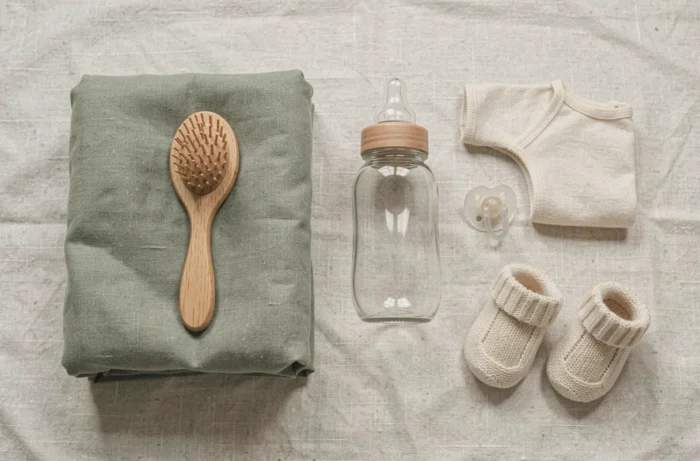
A daily bath isn’t medically necessary for a newborn. Two or three baths a week are enough, along with a washcloth for the face and skin folds. A standard rigid baby bath works well, but a foldable model can be stored in the shower without taking up space.
You only need a few products for diaper changes:
- Liniment or saline solution and cotton pads, which can replace scented wipes that often irritate newborn skin.
- Diaper cream to use only if redness appears, not as a routine preventative measure.
- A bath thermometer and a body thermometer—the only two measuring tools you really need.
- Enough diapers to last five to seven days. A newborn uses between six and ten diapers a day, so be sure to factor this into your budget.
Stroller and car seat: two purchases worth thinking through
A car seat is required from the moment you leave the maternity ward. Choose a Group 0+ model (rear-facing) that fits your car and, if possible, attaches to a stroller frame to create a travel system. Compatibility between brands isn’t guaranteed, so check the adapters before buying to avoid any surprises.
When choosing a stroller, think about the terrain you’ll use it on every day. A compact, lightweight city stroller works well on pavements and public transport. A frame with large wheels is better for trails or cobblestones. An all-purpose model aims to do both, often at the cost of extra weight. Folded size matters just as much as seat comfort, so measure your car boot and apartment entrance before you choose.
Breastfeeding or bottle-feeding will determine another part of your shopping list. For breastfeeding, two or three nursing bras and breast pads are enough to get started. For bottle-feeding, three glass or BPA-free plastic bottles, a bottle brush and a bottle warmer (optional) make up the basic kit. Add other items, such as a breast pump or steriliser, based on your needs after the birth.
Getting ready for a baby doesn’t mean filling an entire room before the big day. Buying fewer things, but choosing them carefully to suit your home and routine, leaves you room to make adjustments after the first few weeks. You’ll discover what your newborn really needs day by day, not in a catalogue.